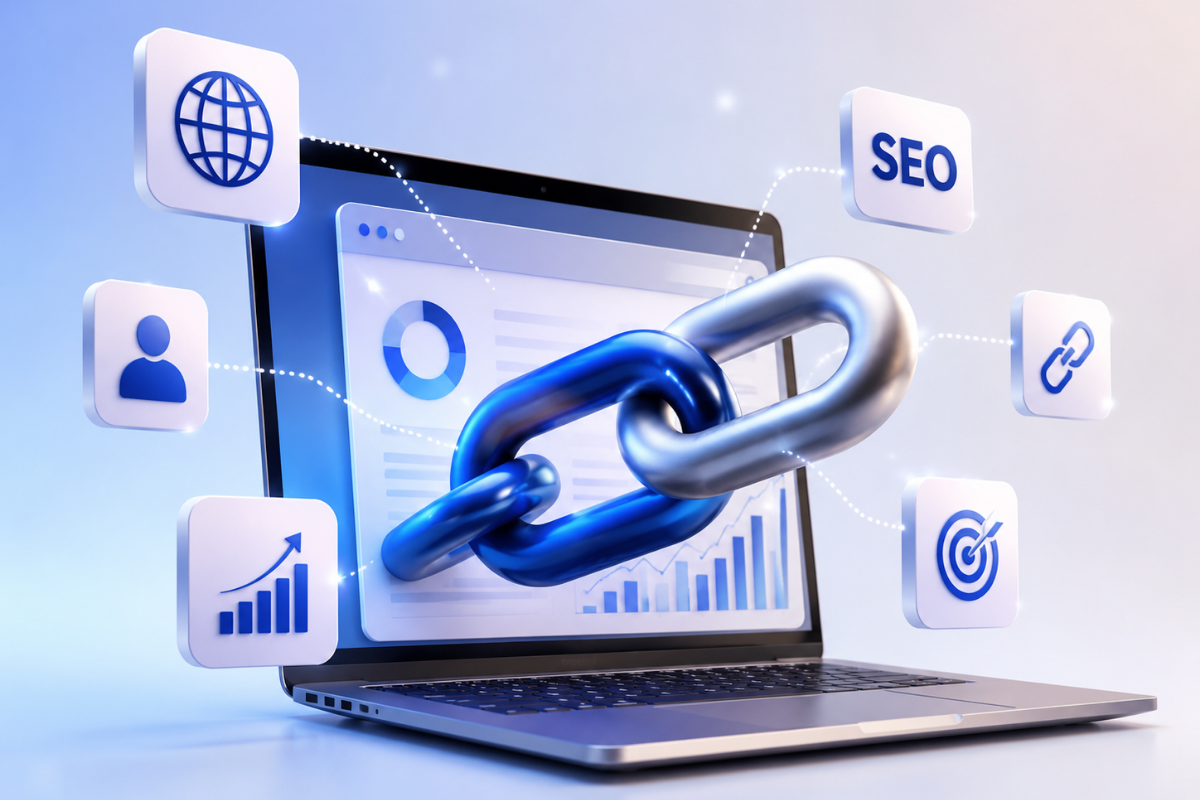
The success of a website doesn't solely depend on the quality of its code or the richness of its content. External endorsements, references, and trust signals make that site valuable in the eyes of search engines. This is precisely where the question "what is off-page SEO" comes into play. Off-page SEO encompasses all activities that occur outside your site but directly affect your site's visibility in search engines. This vast ecosystem, ranging from backlinks to social media mentions, brand reputation to reviews, has become more critical than ever in 2026.
What is Off-Page SEO? Basic Definition and Scope
Off-page SEO refers to all optimization activities performed outside of a website's own domain, aiming to improve search engine rankings. In other words, off-site SEO work is the art of proving your site's reputation, credibility, and authority to the outside world.
While on-page SEO deals with the internal structure of your site, off-page SEO optimization focuses entirely on external factors. These include:
Links from other websites (backlinks)
Brand mentions and citations
Social media interactions
Customer reviews and reputation management
Local business listings and directory submissions
Digital PR and press releases
Influencer collaborations
As of 2026, off-page SEO directly impacts not only Google rankings but also visibility in AI-powered search engines (ChatGPT Search, Gemini, Perplexity, Claude).
Why is Off-Page SEO Important? The 2026 Perspective
The importance of off-page SEO lies in the fundamental operating logic of search engines. Google and other search engines need external signals to measure the value of a website. So, why has this importance increased even further in 2026?
Authority Signals in the Age of Artificial Intelligence
AI models place more weight than ever on authority, trust, and cross-verification signals when synthesizing information. With the proliferation of AI Overviews, a strong off-page presence is essential for your brand to appear in these automated responses.
The Threat of Zero-Click Search
Research indicates that in the presence of AI Overviews, click-through rates (CTR) can drop by up to 65%. In this scenario, it is vital for your brand to appear not only in rankings but also in AI answers.
Proving Trust
Google's Helpful Content System is a site-wide signal that evaluates the entire site. Off-page efforts prove how reliable and useful your site is in the eyes of this system.
How to Do Off-Page SEO? A Step-by-Step Strategic Approach
Answering "how to do off-page SEO" is not about a single method. It requires a multi-layered strategy. Here are actionable steps for 2026:
1. Current State Analysis
The first step is to understand your site's current off-page profile. Analyze your backlink profile, brand mentions, and reputation signals. Tools like Ahrefs, Semrush, or Moz, which are off-page SEO tools, come into play here.
2. Improving the Backlink Profile
Quality backlinks are the backbone of off-page SEO. However, the goal here is quality, not quantity. A single link from an authoritative site is more valuable than hundreds of low-quality links.
3. Digital PR and Brand Awareness
Getting media coverage, speaking at industry conferences, publishing original research – all of these are among the most effective ways to earn natural backlinks.
4. Local SEO and Directory Listings
Google Business Profile optimization is one of the most effective off-page strategies for local businesses. The consistency of your information in directories also creates a trust signal.
5. Social Signals and Community Engagement
While social media is not a direct ranking factor, it indirectly influences by increasing visibility and brand mentions.
Off-Page SEO Techniques: Methods That Work in 2026
Off-page SEO techniques have evolved over the years. Tactics that worked in the past might even lead to penalties today. Here are current and ethical techniques that can be applied in 2026:
1. Earning Editorial Backlinks
The most valuable type of backlink is one organically added by editors. To achieve this, create content based on unique data, industry reports, and in-depth guides.
2. Broken Link Building
Identify broken links on authoritative sites in your industry and suggest your own content. This is a mutually beneficial method.
3. Guest Posting
Guest posting on relevant, authoritative sites is one of the most effective ways to gain both brand awareness and quality backlinks. However, avoid writing too frequently for the same site.
4. Digital PR and Data-Driven Campaigns
Original research, surveys, and industry reports attract the attention of journalists and bloggers. Such campaigns provide a natural flow of backlinks.
5. HARO (Help a Reporter Out) and Similar Platforms
Getting media coverage by responding to journalists' requests for sources earns both authority and quality links.
6. Influencer Collaborations
Collaborate with influential figures in your industry to gain social media visibility and obtain natural links.
What is a Backlink and Why is it So Important?
The answer to "what is a backlink" is quite simple: it is any link from another website to your site. However, behind this simple definition lies a much deeper dynamic.
Why Are Backlinks Valuable?
Backlinks are digital votes that one website gives to another. When a site links to you, it essentially sends the message, "this site is valuable, I trust this site." Search engines collect these votes and determine your site's authority.
Difference Between Quality and Low-Quality Backlinks
Feature | Quality Backlink | Low-Quality Backlink |
|---|---|---|
Source Site Authority | High Domain Rating (DR) | Low or zero authority |
Topic Relevancy | Directly relevant to your niche | Irrelevant or spammy content |
Link Type | Editorial, natural | Purchased, exchanged |
Anchor Text | Natural, varied | Over-optimized, exact match |
Traffic | Brings real organic traffic | No traffic or bot traffic |
In 2026, Google, with its AI-powered spam filters, detects and penalizes low-quality backlinks much faster.
How to Get Quality Backlinks? 2026 Strategies
The question of "how to get quality backlinks" is one that every SEO expert focuses on most. Here are ethical and effective methods that can be applied in 2026:
1. Competitor Backlink Analysis
Analyze which sites your competitors are getting links from. These sites are the sources you should target as well.
2. "Skyscraper Technique"
Find your competitors' content that gets the most links, then create a more comprehensive, more up-to-date, and more valuable version. Afterward, promote this content to relevant individuals.
3. Publishing Original Data and Research
Gathering and publishing data that no one else in your industry has is one of the most powerful ways to generate a natural backlink flow.
4. Resource Page Links
Identify "resources" or "useful links" pages in your industry and offer to have your site added to these lists.
5. Community Engagement and Forums
By providing valuable contributions on forums, Reddit, or Quora related to your niche, you can earn natural links. However, the goal here is not spam, but to offer genuine value.
Link Building Strategies: New Rules for Earning Links in 2026
Link building is the most critical and most debated area of off-page SEO. In 2026, link building strategies require a natural and value-driven approach that adapts to the age of artificial intelligence.
Why Old Methods No Longer Work?
Methods popular years ago, such as link exchange, submitting to low-quality directories, and automated backlink bots, are now instantly detected and penalized by Google's AI-powered spam algorithms.
New Paradigm in Link Building
In 2026, a successful link building strategy is based on the following principles:
Value-Oriented Approach: First, offer value to your target audience; links will be a natural result of this.
Diversity and Naturalness: Links from different types of sources (blogs, news sites, forums, academic sources, etc.) appear more natural.
Contextual Relevance: The text where the link is placed should be relevant to your topic.
Anchor Text Diversity: Avoid using the same exact match anchor texts like "off-page SEO." Use brand names, URLs, natural phrases, and related keywords.
Actionable Link Building Tactics
Create Resource Lists: Create a comprehensive list of resources related to your industry and suggest it to relevant websites.
Testimonial Links: Write testimonials about products or services you use. These testimonials often include a link to your site.
Expert Roundup: Collecting and publishing opinions from experts in your industry helps you get links from their sites and encourages them to share.
Podcasts and Interviews: Being a guest on industry podcasts is a great way to gain both brand awareness and quality backlinks.
Off-Page SEO Tools: Which Ones to Use in 2026?
Using the right off-page SEO tools plays a decisive role in the success of your strategy. Here are the tools preferred by professional SEO experts in 2026 and their areas of use:
Backlink Analysis Tools
Tool | Strong Point | Innovation in 2026 |
|---|---|---|
Ahrefs | Most comprehensive backlink database | AI-powered spam backlink detection |
Semrush | Competitor backlink analysis | Backlink profile health score |
Moz Link Explorer | User-friendly interface | Real-time link discovery |
Majestic | Trust Flow metric | Topic-based site segmentation |
Brand Monitoring and Digital PR Tools
Mention: Real-time tracking of brand mentions and citations.
Brand24: Analyzes brand visibility on social media and the web.
HARO: A platform that connects you with journalists.
Local SEO and Directory Management Tools
BrightLocal: Manages your local business listings.
Yext: Synchronizes your information across directories.
Professional advice: Subscribing to one or two main tools and learning them in depth is much more effective than superficially using many tools.
Most Common Off-Page SEO Mistakes
Common mistakes made during off-page SEO work can lead to wasted effort and even penalties. Here are the most critical mistakes and suggested solutions:
1. Buying Low-Quality Backlinks
Purchasing links from low-quality sites can lead to a manual penalty for your site if detected by Google's link spam algorithm.
Solution: Never buy backlinks. Focus on organic and natural methods.
2. Over-Optimizing Anchor Text
If all links use exact match anchor texts like "off-page SEO," it appears manipulative in Google's eyes.
Solution: Ensure anchor text diversity. Use natural phrases like brand name, URL, "click here," and related terms.
3. Focusing Only on Backlinks
Off-page SEO is not just about backlinks. Brand mentions, social signals, and customer reviews are just as important as backlinks.
Solution: Adopt a holistic approach.
4. Not Doing Competitor Analysis
You cannot create a successful off-page strategy without knowing what your competitors are doing.
Solution: Perform regular competitor analysis and adjust your strategy accordingly.
5. Neglecting Content
No amount of off-page work can save poor content. Sites link to you because you have quality content.
Solution: Implement on-page and off-page SEO together.
Professional Off-Page SEO Recommendations
With over 20 years of experience, here are a few heartfelt tips for those looking to succeed in this field:
Be Patient: Off-page SEO results don't come immediately. Building a quality backlink profile can take months. Methods promising quick results are often risky.
Build Relationships: Link building is essentially relationship building. Establish genuine connections with people in your industry.
Speak with Data: Producing content based on unique data is the most powerful way to earn natural backlinks.
Ensure Diversity: Different types of backlinks (dofollow/nofollow, different source types) create a natural profile.
Regularly Audit: Check your backlink profile monthly. Disavow harmful links using Google's Disavow tool.
Off-Page SEO vs. On-Page SEO Comparison
Factor | Off-Page SEO | On-Page SEO |
|---|---|---|
Definition | Activities outside the site | Optimizations within the site |
Examples | Backlinks, social signals, brand mentions | Title tags, meta descriptions, content quality |
Level of Control | Low (dependent on third parties) | High (full control) |
Time to See Results | Long (months) | Short (weeks) |
Importance | More than 50% of rankings | Approximately 30% of rankings |
These two disciplines complement each other. A site with excellent on-page SEO can reach the top with quality off-page work. Conversely, a strong backlink profile cannot save weak on-page SEO in the long run.
The Future of Off-Page SEO: 2026 and Beyond
The evolution of off-page SEO is progressing as rapidly as search engines themselves. As we approach 2026, we see that the traditional backlink-focused approach has been replaced by a much more comprehensive vision.
Off-Page Signals in the Age of AI
Google's statement that AI-powered search sessions last two to three times longer than traditional searches indicates a radical shift in user behavior. Sites cited by brand in AI Overviews receive 35% more organic clicks than their competitors. This proves that off-page SEO has become a tool not just for ranking, but for directly gaining traffic.
In 2026, off-page SEO is less about "having the most links" and more about "building the most consistent signal network around a specific set of questions." If AI models cannot confidently point to a brand as a source, rankings become irrelevant.
GEO (Generative Engine Optimization) and AEO (Answer Engine Optimization)
Generative Engine Optimization (GEO) is the process of structuring your content and off-site presence so that AI-powered search engines feature you as a trusted source. In other words, working to make generative engines like ChatGPT, Gemini, Claude, and Perplexity prefer you is the off-page strategy of the future.
John Mueller from Google's advice to businesses to focus on AI search traffic when asked "Is SEO still enough, or should we also consider GEO?" demonstrates how critical this area is.
The Rise of Entity SEO and Topical Authority
In 2026, Google prioritizes entity prominence much more than keywords. Off-page SEO efforts are no longer just about link building, but the art of positioning your brand as an "entity." The stronger your topical authority, the higher the likelihood of AI engines citing you as a source.
Expert Assessment: The Future of Off-Page SEO
I've been in this industry for over 20 years, and I can confidently say that off-page SEO has never been this exciting and complex.
Backlinks Didn't Die, They Transformed
The claims that "backlinks are dead" are exaggerated. However, the nature of backlinks has changed. Now, not all links are equal; context, trust, and authority are paramount. Google's Search Quality Rater Guidelines emphasize that a site's off-site reputation plays a critical role in determining credibility. Off-page SEO is the method of proving E-E-A-T (Experience, Expertise, Authoritativeness, Trustworthiness) externally.
Multi-Channel Presence is Essential
It's no longer enough to rely solely on a backlink profile. A multi-channel approach including brand mentions, social media presence, podcast visibility, digital PR, and local listings is mandatory. No matter how good your site is, if you're not visible in the outside world, AI engines won't notice you.
Data and Originality Are Golden
In the age of artificial intelligence, the biggest competitive advantage is original data and research. AI systems prefer unique and verifiable information. Producing data that no one else in your industry has is the most powerful way to earn both backlinks and AI citations.
The Transformation of Off-Page SEO: Not Just Ranking, But Building Trust
Viewing off-page SEO merely as a "ranking improvement tool" means utilizing only a tiny fraction of its potential. In 2026, off-page SEO is the cornerstone of digital reputation management, brand trust building, and visibility in the age of artificial intelligence.
Key Takeaways
Off-page SEO encompasses all activities outside your site that affect rankings.
Backlinks are still important, but quality comes before quantity.
In 2026, visibility in AI engines (GEO/AEO) is the new goal of off-page SEO.
Brand mentions, social signals, and customer reviews are as valuable as backlinks.
Google's Helpful Content System evaluates off-page signals site-wide.
Final Tips for Success in Off-Page SEO
I've been in the industry for 20 years, and the biggest mistake I've seen is treating off-page SEO as a "to-do list." Yet, this is about continuous relationship management and reputation building.
Analyze your competitors, do better than them, but never copy. Produce original data, publish research that makes a difference in your industry. Remember, people (and AI engines) love authentic and reliable sources.
Invest in Digital PR efforts. Getting media coverage, speaking at industry conferences, publishing original reports… All of these trigger a natural backlink flow.
And most importantly: Be patient. Off-page SEO is a marathon, not a sprint. Methods promising quick results are often risky and will harm you in the long run.
As the digitalup.tr team, we are always here to help you with your digital marketing and SEO strategies.

Recep Bayoğlu
SEO Team Leader
If you want to talk more about this topic or need a tailored solution for your brand, you can reach me directly.
Our Services
Related Services
Google Ads Management
Top pickUse your ad budget most efficiently with professional Google Ads management.
Meta (Facebook & Instagram)
Reach your target audience with Facebook and Instagram ads.
SEO Consulting
Rank higher in search engines and grow organic traffic.
Social Media Management
Strengthen your online presence with professional social media management.
E-Commerce Solutions
T-Soft, İkas, Ticimax and İdeasoft infrastructures.
More from this category
digitalup What is a Knowledge Graph?
digitalup Can SEO Be Done With Artificial Intelligence? (Step-by-Step AI SEO Guide)
digitalup What is Entity SEO? Google's System for Understanding and Relating Entities