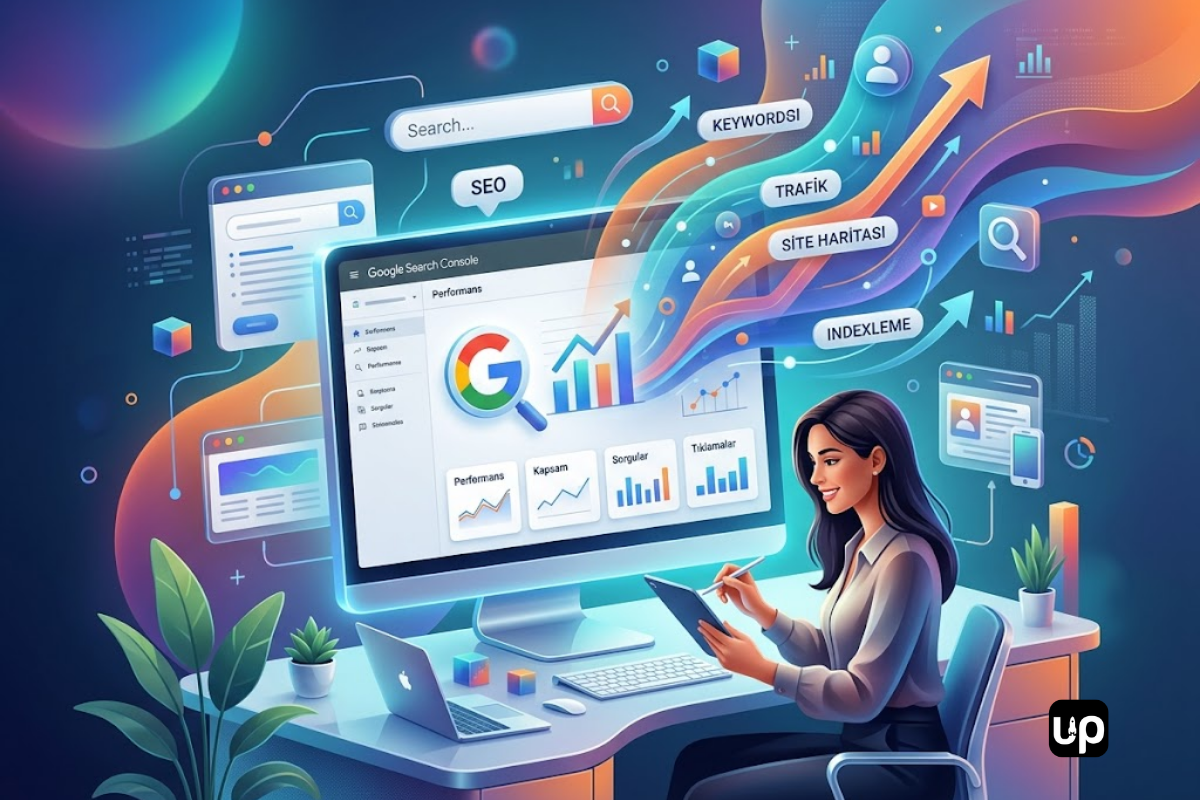
What is SEO? The Most Comprehensive and Up-to-Date Guide for 2026 (In the Era of GEO & AEO)
In 2026, SEO isn't just about ranking, it's about appearing in AI answers. Discover this comprehensive guide on GEO, AEO, zero-click searches & current strategies.
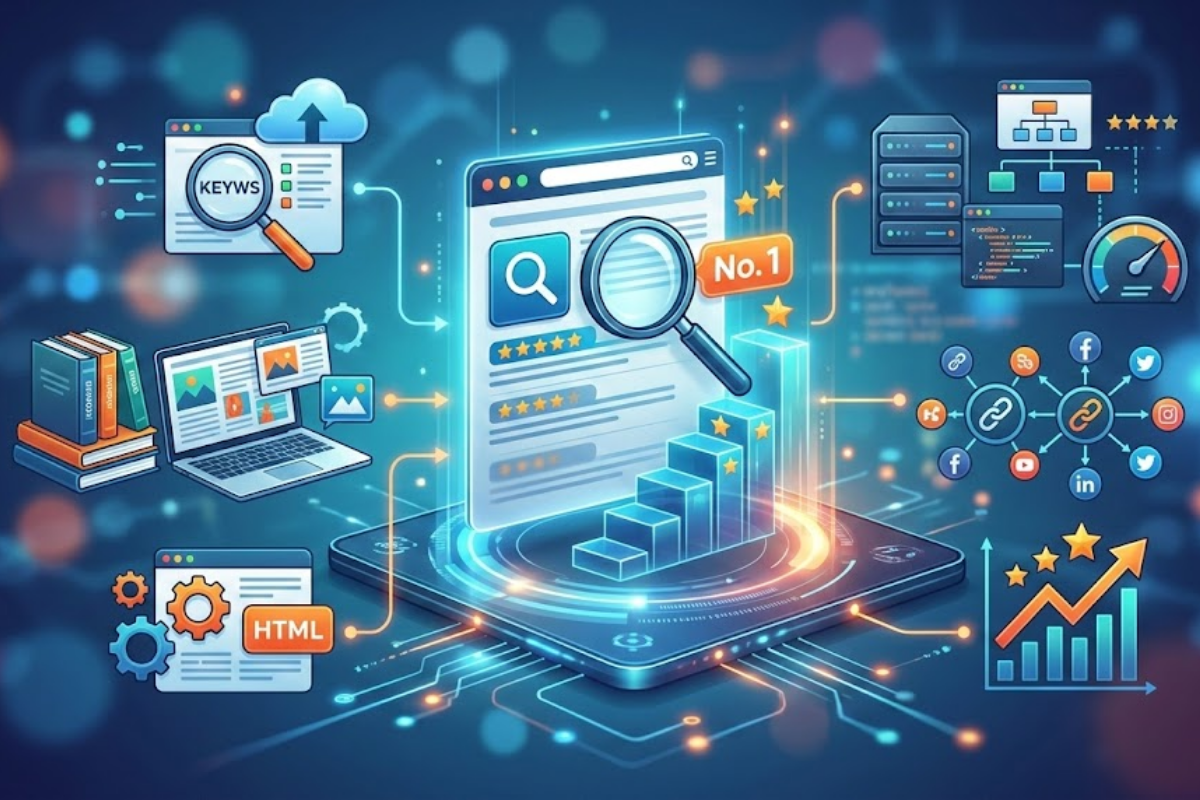
What is the cost of being invisible on the internet? You have a perfect website, you offer great products, but if no one can find you, your digital presence doesn't mean much. This is precisely where the question "What is SEO?" becomes the most critical concept determining the destiny of your digital presence. But it's 2026, and SEO is no longer the SEO of 5 years ago. Search engines have evolved with artificial intelligence, user behavior has fundamentally changed, and the concept of "ranking" is being redefined. This guide addresses the current state of SEO from a 2026 perspective, including new concepts such as Generative Engine Optimization (GEO) and Answer Engine Optimization (AEO). You will discover a step-by-step roadmap to connect with your target audience.
What is SEO? A Redefinition from a 2026 Perspective
We can answer the question "What is SEO?" in its simplest form as follows: Search Engine Optimization is the sum of efforts made to increase the visibility of a website in traditional search engines like Google, Yandex, Bing, and now in generative AI-powered search tools like Perplexity, ChatGPT, and Google AI Overviews.
According to Düzce University's definition, SEO is "improvement and development work for search engines." However, in 2026, we must broaden this definition. We are no longer just talking about optimizing for search engines, but also for large language models (LLMs) and artificial intelligence assistants.
But don't let such a technical definition confuse you. Let's concretize it with an example. Suppose you opened a boutique coffee shop in Istanbul. The practical equivalent of "What is SEO?" in 2026 is this: it's not enough to rank high on Google when a user searches for "best filter coffee in Istanbul." When the same user asks Perplexity, "recommend a place where I can drink morning coffee in Istanbul," the AI also needs to catch a comment, blog post, or mention of you on a third-party site and suggest it to the user.
According to a joint study by Princeton University and Indian Institutes of Technology, generative engines are rapidly replacing traditional search engines and fundamentally changing the user experience. This means that SEO is now about optimizing not only for blue links but also for AI answers.
So why is SEO so critical?
Because user behavior has changed. Users who used to click on multiple sites to find an answer to a question now find the answer at the top of search results, or even within AI Overviews, and leave without clicking on any site. This is called "zero-click search," and now more than half of all searches end this way. According to one study, out of every 1000 Google searches in the US and EU, only 360-374 result in a click to the open web. In 2026, SEO means rescuing you from this invisibility and bringing you to a place where your "name is mentioned" when answers are given to users.
How Search Engines Work in 2026
In the past, the operating principle of search engines consisted of three steps: crawling, indexing, and ranking. This is still valid, but now "synthesis" and "answering" steps are also involved.
Crawling & Indexing: Googlebot still roams the internet, discovering new pages. However, it now analyzes not only text but also structured data, schema, and the relationships between content.
Understanding and Contextualization: AI-powered algorithms try to understand not keywords on a page, but meaning, context, and user intent. Machine learning models analyze billions of data points to learn which content best answers which question.
Synthesis & Answering: This is the biggest difference. While traditional search engines present you with a "list of links," generative AI engines synthesize multiple sources and offer you a "direct answer." For example, when you ask, "Should I buy an electric car?", instead of giving you links to ten different blog posts, it generates an answer summarizing the advantages, disadvantages, and things to consider.
Google's Goal Hasn't Changed: The Best User Experience
Google's fundamental goal is still the same: to provide the user with the most accurate, fastest, and most useful result. But the way it does this has changed. While it used to say "list the top 10 results," now it says "synthesize and present the best answer." Search Generative Experience (SGE) does exactly this.
SERPs Come With Answers
In 2026, what we call SERP (Search Engine Results Page) is very different from its old form. When you perform a search, the page you see includes:
-
AI Overviews
-
"People also ask" boxes
-
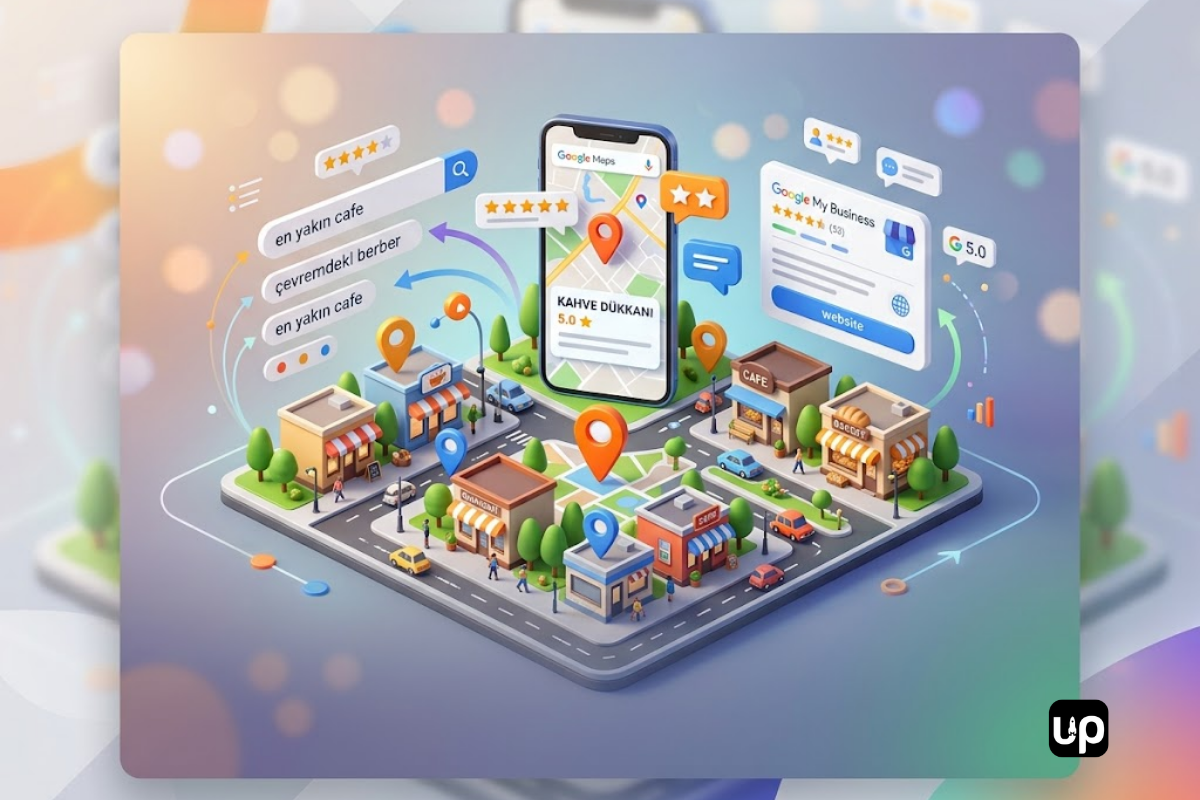
Local maps and business listings
-
Video content (especially YouTube)
-
Forum and community discussions (Reddit, Ekşi Sözlük, etc.)
-
And at the very bottom, perhaps in the lower parts of the screen, traditional "blue links"
It seems that the user gets the answer at the top, often without clicking on any site.
3 Core Components of SEO (2026 Update)
The three core components we've been teaching for years are still valid, but each has acquired new meanings in 2026.
Technical SEO: Being Readable for AI
Technical SEO is still like the foundation of a building; invisible but its absence is disastrous. In 2026, the meaning of technical SEO has expanded.
-
Site Speed and Core Web Vitals: Impatient users still abandon slow sites. But now there's also "AI patience." AI bots don't like slow loading sites either, and they can reduce the number of pages to crawl.
-
Mobile Responsiveness: This is no longer even a topic of discussion. Mobile-first indexing has long been completed.
-
Structured Data (Schema Markup): This is the most critical technical SEO element of 2026. Structured data is the most direct way to "explain" your content to AI. Pages using FAQ schema are 40% more likely to be cited by AI. For sites using three or more schema types, this rate increases by another 13%.
-
Heading Structure: A clean H1-H2-H3 order increases the speed and accuracy with which AI models understand your content. Regular heading hierarchy increases the likelihood of being cited by 2.8 times.
On-Page SEO: Writing Not Just for Humans, But for Machines Too
Content is still king. But now there are two kings: the human reader and the AI reader.
-
Content Quality and Semantic Depth: The era of keyword density is over. Now, "topic coherence" and "semantic depth" are important. How comprehensively you cover a topic, how well you address subheadings, and how well you answer sub-questions are measured.
-
Search Intent: Not words, but intent matters. What does the user really want when they say "best coffee machine"? Comparison, purchase, or just information? According to Clearscope's search intent analysis, content that accurately captures intent is many times more likely to be highlighted by AI.
-
Lists and Readability: Breaking dense texts into lists and scannable blocks improves both human readability and LLM inference efficiency. Data shows that approximately 80% of pages cited by ChatGPT use list-based structures. In Google's traditional first-page results, this rate is only 29%.
Off-Page SEO: Now Authority Isn't on Your Site, It's in What Others Say About You
Here's the most striking change of 2026. Backlinks are still important, but the concept of authority has been redefined.
AirOps' analysis covering more than 21,000 brands reveals a striking result: 85% of brand mentions in AI-generated answers come from third-party sources rather than the brand's own website. More importantly, brands are 6.5 times more likely to be cited through third-party content than their own sites.
What does this mean? The excellent article you spent months writing on your site might be less valuable than a 10-minute comment written by a user on Reddit. Because AI finds communities and real user discussions more "authentic" and "reliable."
Approximately 90% of third-party brand mentions come from lists, comparison pages, and review compilations. AI models perceive multiple independent sites listing a product as "one of the best" as a strong consensus signal.
The power of community discussions is also undeniable. Approximately 48% of AI search citations come from community platforms like Reddit and YouTube. Reddit alone is cited as a source in approximately 22% of generated answers.
New Concepts: GEO (Generative Engine Optimization) and AEO (Answer Engine Optimization)
It's no longer enough to talk only about SEO. In 2026, two new concepts have entered our lives.
What is GEO? (Generative Engine Optimization)
GEO is the optimization work done to ensure that your content is understood, deemed reliable, and used as a source in answers by generative artificial intelligence engines (ChatGPT, Perplexity, Google AI Overviews, Claude, etc.).
Princeton and Indian Institutes of Technology's research reveals that GEO has three core visibility metrics:
-
Word Count Impact: How much of the AI-generated answer comes from your content? If your content takes up 100 words in a 500-word answer, your word count impact is 20%.
-
Position-Weighted Word Count: Are you at the beginning of the answer or at the end? Since user attention decreases from top to bottom, being at the beginning of the answer is much more valuable.
-
Subjective Display Impact: The quality and impact of your citation. It is evaluated across seven different dimensions: relevance, originality, authority, completeness, and brand presence.
What is AEO? (Answer Engine Optimization)
AEO aims to structure your content to directly answer questions and thus appear in "answer boxes" (featured snippets) and voice search results. AEO is based on providing the clearest, shortest, and most accurate answer to the user's question.
Why is SEO So Important? (Brand Awareness in a Zero-Click World)
In 2026, the importance of SEO is shaped around "visibility" and "brand awareness" rather than traffic.
-
You are Visible Even If Not Clicked: In this era of increasing zero-click searches, your name being mentioned in an AI answer increases your brand awareness. Even if the user doesn't click on your site, they may have seen your brand and are directly searching for you in their next query.
-
Reinforces Your Credibility: Being cited by AI means your authority is approved by artificial intelligence. This solidifies your brand's reputation in the digital world.
-
Separates You From Your Competitors: While your competitors are still focusing only on traditional SEO, you get ahead of them by appearing in AI answers with GEO and AEO strategies.
-
Prepares Your Website for the Future: AI-focused optimization prepares your website not only for today's but also for tomorrow's search habits.
-
Measurable and Data-Driven: While "ranking" is tracked in traditional SEO, in 2026, "AI visibility" and "number of citations" are also tracked.
5 Golden Rules for Success in 2026
Some truths haven't changed over the years, but it's important to note the ones that have. Here are 5 actionable rules for successful SEO in 2026:
-
Freshness is the Foundation of Trust: AI models prefer up-to-date information. Pages not updated every three months are three times less likely to be cited by AI than updated pages. This rate is even more critical for commercial queries: 83% of commercial citations come from pages updated within the last year.
-
Structured Content is the Language of LLMs: Chaotic, disorganized content is incomprehensible to AI. Clear heading hierarchy, schema usage, and lists are the best ways to "explain" your content to AI.
-
Build Third-Party Authority: Saying "we are the best" on your own site is not enough. What others say about you, especially on community platforms and review sites, is much more important. Having a presence on Reddit, YouTube, and industry forums helps you appear in AI answers.
-
Implement a "Long Long Tail" Strategy: Don't just focus on a single high-volume keyword, but create content networks that cover all sub-questions and sub-topics related to a subject. AI models evaluate how comprehensive you are on a topic and trust you accordingly.
-
Adopt a Rigorous SEO Approach: Traditional SEO is like "set it and forget it." SEO in 2026 requires continuous testing, measurement, and improvement. Formulate hypotheses, test them, measure the results, and scale what works, abandon what doesn't. This cyclical approach is the key to sustainable success.
The Future Has Already Arrived: It's Your Turn
SEO is not an invisible effort, but a marathon requiring patience, strategy, and adaptation. In this guide, starting from "What is SEO?", we have discussed in detail how search engines work in 2026, the concepts of GEO and AEO, new visibility metrics, and the rules for success.
Remember, in 2026, the secret to digital visibility is simple: optimize not just to "be clicked," but also to "be cited." Speak the language of AI, anticipate the questions you will answer for it, and structure your content accordingly.
Sources
Our Services
Related Services
Google Ads Management
Top pickUse your ad budget most efficiently with professional Google Ads management.
Meta (Facebook & Instagram)
Reach your target audience with Facebook and Instagram ads.
SEO Consulting
Rank higher in search engines and grow organic traffic.
Social Media Management
Strengthen your online presence with professional social media management.
E-Commerce Solutions
T-Soft, İkas, Ticimax and İdeasoft infrastructures.