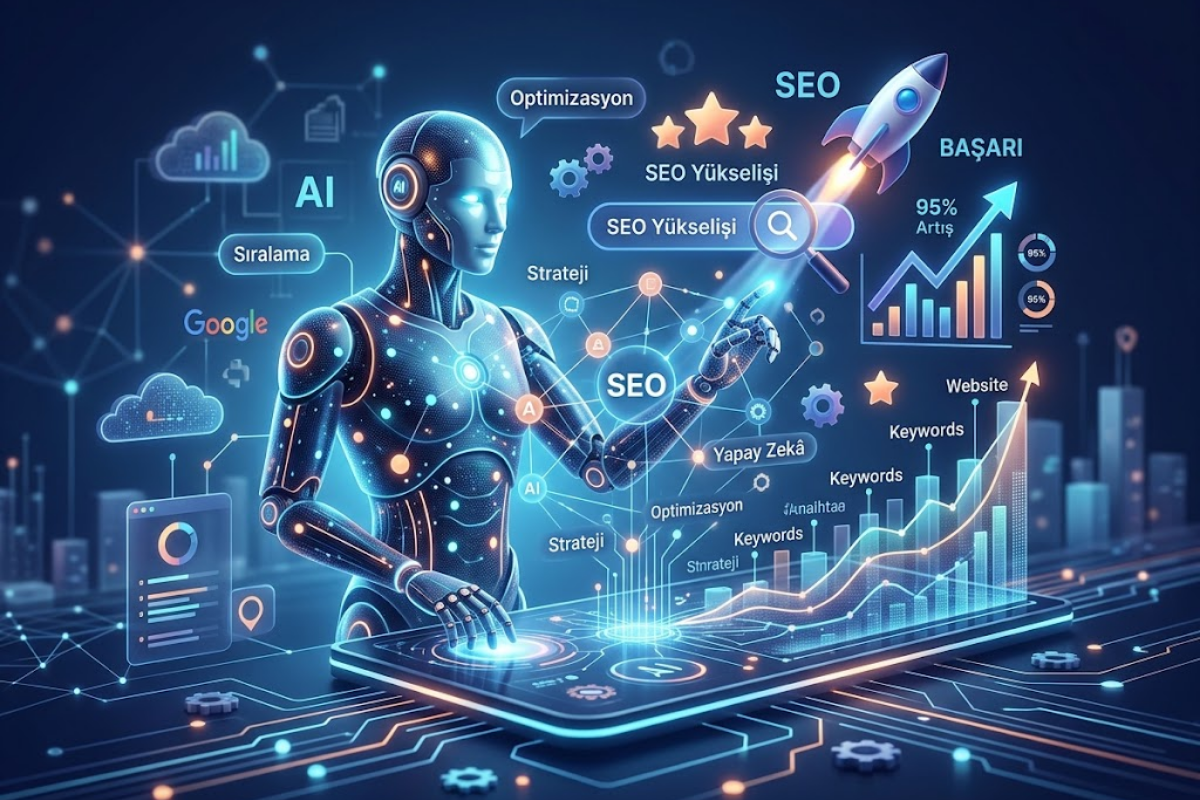
The evolution of search engine algorithms has placed the question of whether SEO can be done with artificial intelligence at the heart of digital marketing. The integration of generative AI models into the search ecosystem has radically increased the speed of data processing for site owners and marketers. Designing SEO strategies with artificial intelligence offers the possibility of automating many steps, from keyword research to technical site analysis, content drafting to semantic clustering. As search engines' ability to understand content deepens, AI-powered SEO efforts gain a dimension that goes beyond traditional methods.
The Relationship Between Artificial Intelligence and SEO: Transforming Search Interfaces
The logic of search engine optimization is based on meeting the user's information needs in the fastest and most accurate way. Recently, search engines have shifted from classic blue-linked listings to smart interfaces that directly answer user questions. This transformation has turned the issue of artificial intelligence SEO compatibility from a preference into a necessity.
Traditional SEO | Future AI-Powered SEO |
|---|---|
Keyword-focused | Semantic intent and entities |
Blue link clicks (blue link focused) | AI Overviews and direct answers |
Static content creation | Dynamic, data-driven content structure |
What are Generative Engine Optimization (GEO) and Answer Engine Optimization (AEO)?
The shaping of the search experience by AI responses has introduced two new concepts into the literature: GEO (Generative Engine Optimization) and AEO (Answer Engine Optimization).
GEO is the art of being a source in the synthesized answers of generative AI engines (Google AI Overviews, Perplexity, etc.). AEO is the process of creating clear, verifiable, and structured answers that voice assistants and direct answer boxes can retrieve. Since this new generation architecture of search engines not only indexes information but also presents it by making sense of it, semantic clarity in content has become critical.
Will Google Penalize AI Content?
One of the most common concerns in the digital marketing world is that texts generated by automation tools will be de-indexed or lose rankings by search engines. When Google's official search guidelines are examined, it is seen that the focus is not on how the content is produced, but rather for whom and with what quality.
Google's Helpful Content System and SpamBrain Mechanism
Google, with its AI-based automation detection called SpamBrain, instantly identifies low-quality and copy-pasted texts that aim to manipulate search results. The Helpful Content System, on the other hand, pushes back autonomous texts that do not offer direct value to the user and are produced solely to gain search engine rankings.
Writing content with AI is not a cause for penalty in itself; however, unsupervised, hallucinated, and autonomous content that does not offer a new perspective to the user falls under SpamBrain's radar.
The Human Touch in E-E-A-T Signals (Human-in-the-Loop)
At the top of Google's evaluation criteria is E-E-A-T (Experience, Expertise, Authoritativeness, Trustworthiness). AI models can scan massive data pools to generate text, but they cannot directly convey "human experience."
Human-in-the-Loop (HIP) Approach: It is the discipline of combining the speed of AI's draft generation and data analysis with the industry expertise, unique experiences, and verification filter of a human editor.
Platforms aiming for sustainable success must operate an editorial control mechanism in AI article SEO processes.
SEO Processes Where Artificial Intelligence is Used Effectively
Seeing search engine optimization as consisting of a single stage is one of the biggest mistakes made. AI SEO techniques offer time savings and in-depth data analysis across a wide range, from strategic planning to strengthening technical infrastructure.
Step | Process | Description / Actions |
|---|---|---|
1. Data Preparation | Semantic keyword and clustering | Intent analysis, topic clustering, entity mapping |
2. Draft & Prompt | Relevant heading skeleton and content structure | Creating headings, subheadings, and structure with AI prompt engineering |
3. Editorial Touch | E-E-A-T review and adding expert experience | Experience, expertise, authoritativeness, and trustworthiness check + human touch |
4. Technical Integration | Schema markup and Python optimizations | JSON-LD, rich results, data validation, automated reporting |
Semantic Keyword Research and Topical Authority Clustering
While traditional keyword research focuses on individual keyword volumes, AI-powered keyword research unravels the semantic relationships between topics. When performing keyword analysis with artificial intelligence, large language models are used to implement the following steps:
Entity Detection: Identifying main entities related to your industry and their associated sub-concepts.
Topic Clustering: Grouping directly related search intents under a single main topic to design authority pages.
Search Intent Analysis: Automatically classifying user searches for information, purchase, or navigation purposes.
Through this methodology, sites achieve Topical Authority by producing comprehensive content in a specific area.
AI-Powered Content Creation and Prompt Engineering
When determining an AI content strategy, detailed guidance (prompt engineering) should be preferred over direct autonomous commands. A well-structured command framework significantly improves quality during the AI-powered SEO-friendly article writing process.
Elements that should be included in an effective prompt structure:
Role Definition: "Act as a Senior SEO Specialist and Content Editor."
Target Audience and Tone: "Address digital marketing experts in a professional but friendly tone."
Structural Text Rules: "Maintain H2 and H3 heading hierarchy, add clear summary definitions of 40-50 words."
Semantic Keyword Pool: "Naturally use LSI and NLP concepts within the text."
Technical SEO, Python Coding, and Schema Markup Generation
The use of artificial intelligence in SEO is not limited to text writing; high efficiency is also achieved in technical SEO processes with AI.
Schema Markup Generation: Preparing
FAQPage,Article, orProductdata in JSON-LD format without the risk of error.
Data Analysis with Python Scripts: Analyzing log files, extracting redirection maps, and detecting broken links in large datasets.
Automated Code Improvement: Designing .htaccess configurations, robot.txt rules, and performance-enhancing code snippets in seconds.
Risks and Limitations Encountered When Doing SEO with Artificial Intelligence
The appealing environment offered by automation capabilities can lead to serious organic traffic losses if implemented without control. The answer to the question of whether AI SEO is harmful is directly related to how the process is managed.
Hallucination (Misinformation) and Copyright Risk
One of the most significant weaknesses of large language models is their tendency to produce inconsistent or completely fabricated data, known as hallucination.
Data Verification: Statistical data, dates, and official references provided by artificial intelligence must be confirmed by an expert before publication.
Copyrights: Autonomous texts created by directly feeding from other sources can lead to originality infringements and copyright issues.
Excessive AI Use and Getting Caught by Algorithm Updates
Producing hundreds of low-quality pages solely with the goal of gaining search engine rankings is directly targeting the SpamBrain system. Although AI content may initially gain momentum in Google rankings, structures that disregard user experience suffer significant visibility loss in the first major algorithm update (Core Update).
Most Popular Artificial Intelligence SEO Tools
AI SEO tools that stand out in advanced data analysis, competitor tracking, and content optimization accelerate digital marketing processes:
ChatGPT & Claude: Ideal for semantic content structuring, technical code writing, prompt-driven text drafting, and idea generation.
Gemini: Works directly integrated with the Google ecosystem, offering advantages in current search trends and data analysis.
SurferSEO & MarketMuse: Analyzes keyword density and semantic deficiencies using natural language processing (NLP) models.
Screaming Frog (AI Integration): Automatically reports internal technical errors, missing alt tags, and redirect chains.
AI SEO examples applied in projects show that hybrid models combining these tools yield the fastest results. Just as in Digitalup's data-driven growth strategies, combining automation tools with a human-centered marketing approach makes organic reach permanent.
Be Part of the Transformation: Design an AI-Powered SEO Strategy
The radical change in the search ecosystem invalidates old-style content and technical approaches. Positioning artificial intelligence as an assistant that surpasses competitors and managing publishing processes with expert supervision is the most reliable way to achieve lasting visibility in search engines. To secure your place in the new generation interfaces of search engines, start your site-specific AI-powered SEO efforts without delay.

Recep Bayoğlu
SEO Team Leader
If you want to talk more about this topic or need a tailored solution for your brand, you can reach me directly.
Our Services
Related Services
Google Ads Management
Top pickUse your ad budget most efficiently with professional Google Ads management.
Meta (Facebook & Instagram)
Reach your target audience with Facebook and Instagram ads.
SEO Consulting
Rank higher in search engines and grow organic traffic.
GEO Consulting
Get cited as a source inside ChatGPT, Gemini and Perplexity answers.
Social Media Management
Strengthen your online presence with professional social media management.
E-Commerce Solutions
T-Soft, İkas, Ticimax and İdeasoft infrastructures.
TikTok Ads
Reach young audiences with TikTok ads.
Video Production
Professional 4K video production services.
Web Design
Modern user-friendly web design.
Yandex Ads Management
Reach Russian and CIS markets with Yandex ads.
Telegram Ads Management
Reach audiences directly with Telegram sponsored messages.
ChatGPT Ads Consulting
Position your brand in the in-chat advertising ecosystem.
Gemini Ads Consulting
Gain an early advantage in Google AI Mode ads.
T-Soft E-Commerce Site
T-Soft infrastructure for enterprise scale.
İdeasoft E-Commerce Site
Flexible and powerful e-commerce infrastructure.
İkas E-Commerce Site
Fast setup, modern e-commerce infrastructure.
Ticimax E-Commerce Site
Scalable e-commerce solution.
More from this category

digitalup What Is Zero-Click Search?

digitalup What is Programmatic SEO (pSEO)? A Guide to Scalable Traffic with Thousands of Pages

digitalup What is SEO? The Evolution of Search Engine Optimization in 2027 and Beyond