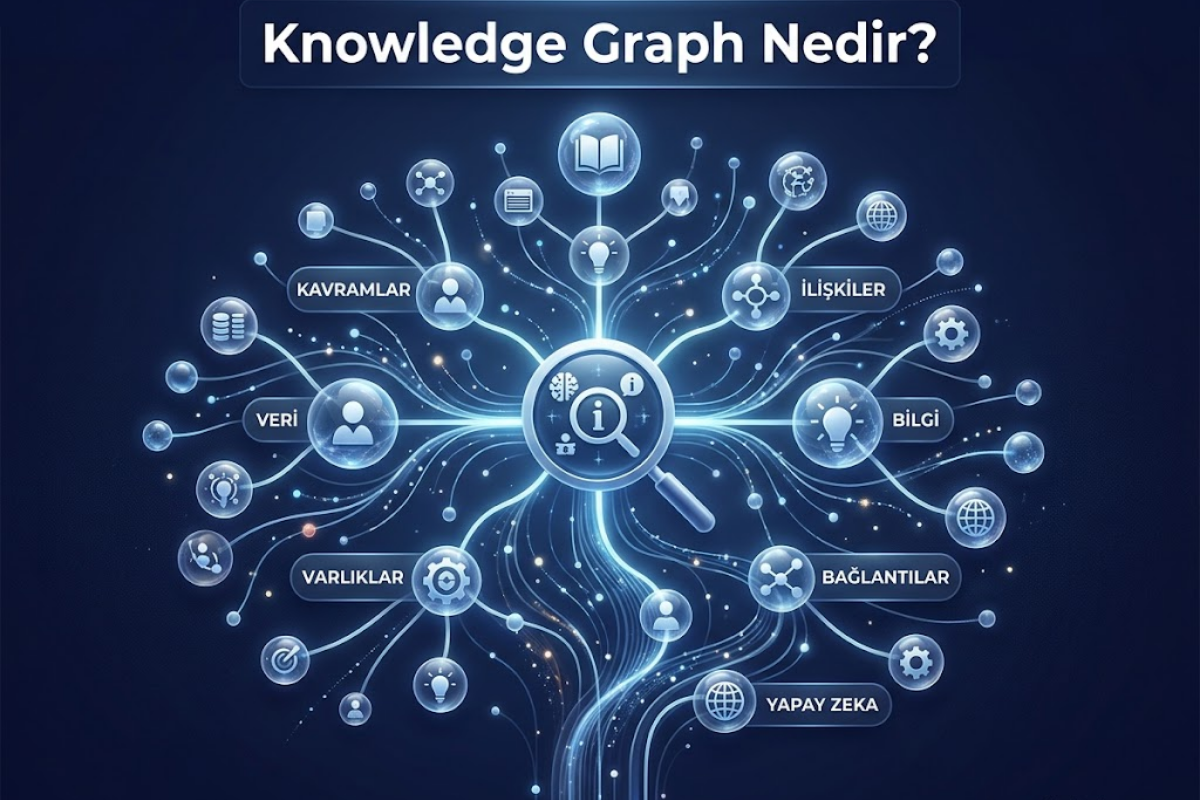
The Knowledge Graph (Bilgi Grafiği) is a semantic database used by search engines to understand the relationships between objects, people, places, and concepts. By focusing on entities instead of words, it enables the direct provision of the most accurate and contextual answers to user search intent.
As search engines process billions of indexed web pages, they go beyond plain text to map real-world entities. This structure, introduced by Google in 2012 with the philosophy "Things, not strings," is a revolutionary turning point in grasping the meaning behind search queries.
Instead of merely matching terms typed into the search box, this semantic database analyzes the context of the query, the searcher's intent, and the hierarchical connections between concepts, transforming search engine results pages (SERPs) from a passive list into an active information hub.
What is the Knowledge Graph (Bilgi Grafiği)?
The core of the question "What is Google Knowledge Graph?" lies in organizing information in a network structure. While traditional search systems index web pages based on keyword frequency, Knowledge Graph systems identify entities and establish real-world connections between them. Data such as a person's birthplace, the company they founded, or the book they wrote are processed as entities.
In advanced search engine optimization processes, the goal is for search algorithms to recognize your website not merely as a block of text, but as an authoritative entity within its niche. When this recognition occurs, search engines accept the information provided as verified fact and present it directly in information panels to users.
Transition from Words to Entities: Semantic Search Logic
Semantic search deciphers the meaning behind questions users ask in natural language. For example, the word "Apple" can refer to a fruit or a global technology giant.
An entity-based search structure determines the correct meaning by evaluating the searcher's previous searches, location, and other words in the query.
Keyword-Focused System: Scans character strings within text, lists matching documents.
Entity-Focused Semantic System: Analyzes the attributes, relationships, and real-world equivalents of a concept.
Thanks to semantic web standards, search bots can comprehend content on websites like a human. This compels search engine optimization practitioners to focus not only on keyword density but also on the logical relationships between concepts within the content.
How Does the Knowledge Graph Work?
The Knowledge Graph database stores data in an interconnected network structure rather than in traditional rows and columns. When faced with a query, the system scans connections between millions of nodes within milliseconds to produce the most relevant answer.
Nodes, Edges, and Entity Relationships
The architecture of the semantic data structure is built upon three core components:
Nodes: Represent each independent entity in the database. A person, company, city, book, or an abstract concept is defined as a node.
Edges: Determine the relationship and type of connection between nodes. For example, phrases like "is the author of," "is the capital of," "is the manufacturer of" form the edges.
Properties: Are the detailed data belonging to an entity. A person's date of birth, a company's founding year, or a product's technical specifications fall into this group.
This triple structure (Triple: Subject - Predicate - Object) allows search engines to directly answer complex and multi-layered queries such as "writers born in the capital of Turkey."
The Role of Google Algorithms: Hummingbird, RankBrain, and MUM
Google's ability to process semantic data has reached its peak over the years with evolving algorithms:
Hummingbird (2013): Initiated the era of analyzing search queries as a whole, not word by word. It was the first major step in understanding search intent.
RankBrain (2015): Integrated artificial intelligence and machine learning into search processes, associating even previously unasked queries with known entities.
MUM (Multitask Unified Model): Reached the capacity to process text, visual, and audio data simultaneously, combining information from 75 different languages into a single entity network.
Today, this algorithmic structure enables search engines to map relationships between known entities in seconds.
Differences Between Knowledge Graph and Traditional Indexing
In the evolution of search engines, there are fundamental operational differences between traditional text indexing and semantic entity indexing.
Criterion | Traditional Indexing | Knowledge Graph (Semantic) |
Focus | Keywords | Entities and Relationships |
Data Structure | Plain Text / Page Index | Relational Data Network (Graph DB) |
Search Understanding | Character Matching | Context and Intent Analysis |
AI and Voice Search Compatibility | Low | High (GEO / AEO Focused) |
While traditional indexing relies on the exact words typed by the user, the semantic structure understands what the user means and shapes search results accordingly.
Are Knowledge Graph and Knowledge Panel the Same Thing?
These two frequently confused concepts represent the difference between a system's backend and its frontend:
Knowledge Graph: Is the enormous semantic database running in the background, containing billions of entities and relationships. It is invisible, representing the intelligence.
Knowledge Panel: Is the box, usually located on the right side of the search results page (SERP) (at the top on mobile devices), where data retrieved from the Knowledge Graph is visually presented to the user.
The Knowledge Panel is the visual summary, like a business card, reflecting a verified entity in the database.
The Importance of Knowledge Graph for SEO and Its Relationship with GEO/AEO
Transitioning to an entity-based SEO approach in search engine optimization processes has become a necessity for organic visibility. When search engines recognize a website or brand as a distinct entity, a sustainable advantage in ranking performance is gained.
AI Search Engines (AI Overviews) and Entity-Based SEO
AI-focused search engines (Generative Engine Optimization - GEO) and voice search systems (Answer Engine Optimization - AEO) directly refer to reliable entity sources when generating answers.
AI Overviews Integration: When generating summary answers, AI systems reference data provided by verified and authoritative entities within the Knowledge Graph, rather than random sites in the index.
Brand Awareness and Click-Through Rate: Brands with their own information panel on the SERP instill a high level of trust in users. This directly and positively affects click-through rates (CTR).
Voice Search Dominance: Voice assistants (Siri, Google Assistant, etc.) provide users with a single definitive answer. These answers are drawn from the semantic data network with an accuracy rate of over 90%.
When entity-focused constructs are integrated into Digitalup SEO strategies, the risk of sites being negatively affected by algorithmic updates is minimized.
5 Technical Steps to Be Included in Google Knowledge Graph
Becoming a recognized entity in search engines' databases requires the correct technical infrastructure and consistent digital signals.
1. Schema.org (JSON-LD) Structured Data Markup
Labeling your site's content with a machine-readable language is the first rule. You must clearly define your entity's attributes using Organization, Person, Article, or Product schemas.
JSON
{
  "@context": "https://schema.org",
  "@type": "Organization",
  "name": "Digitalup",
  "url": "https://digitalup.tr/",
  "logo": "https://digitalup.tr/logo.png",
  "sameAs": [
    "https://www.linkedin.com/company/digitalup",
    "https://twitter.com/digitalup"
  ]
}
2. Creating a Wikidata and Wikipedia Entry
Wikidata is the open-source database most frequently consulted by search engines when retrieving semantic data. Creating a Wikidata item (Q-number) that meets notability criteria accelerates the verification of your entity.
3. Digital Footprint and Brand Authority Management
Name, address, phone (NAP), and field of activity data must be identical across all digital channels. Consistent mentions (unlinked brand mentions) in press releases, industry directories, and authoritative platforms strengthen entity connections.
4. Using the Google Knowledge Graph Search API
You can query Google's official API to check if your entity has been added to the database and if it has a Machine ID (MID).
Bash
curl "https://kms.googleapis.com/v1/entities:search?query=digitalup&key=YOUR_API_KEY&limit=1"
5. Verified Knowledge Panel Ownership (Claiming Process)
When a panel for your brand or person appears on Google SERP, you must complete the ownership verification process by clicking the "Are you the owner of this knowledge panel?" link. This grants you the authority to update and manage the information in the panel.
Sources
Recep Bayoğlu
SEO Team Leader
If you want to talk more about this topic or need a tailored solution for your brand, you can reach me directly.
Our Services
Related Services
Google Ads Management
Top pickUse your ad budget most efficiently with professional Google Ads management.
Meta (Facebook & Instagram)
Reach your target audience with Facebook and Instagram ads.
SEO Consulting
Rank higher in search engines and grow organic traffic.
GEO Consulting
Get cited as a source inside ChatGPT, Gemini and Perplexity answers.
Social Media Management
Strengthen your online presence with professional social media management.
E-Commerce Solutions
T-Soft, İkas, Ticimax and İdeasoft infrastructures.
TikTok Ads
Reach young audiences with TikTok ads.
Video Production
Professional 4K video production services.
Web Design
Modern user-friendly web design.
Yandex Ads Management
Reach Russian and CIS markets with Yandex ads.
Telegram Ads Management
Reach audiences directly with Telegram sponsored messages.
ChatGPT Ads Consulting
Position your brand in the in-chat advertising ecosystem.
Gemini Ads Consulting
Gain an early advantage in Google AI Mode ads.
T-Soft E-Commerce Site
T-Soft infrastructure for enterprise scale.
İdeasoft E-Commerce Site
Flexible and powerful e-commerce infrastructure.
İkas E-Commerce Site
Fast setup, modern e-commerce infrastructure.
Ticimax E-Commerce Site
Scalable e-commerce solution.
More from this category
digitalup What Is Zero-Click Search?

digitalup What is Programmatic SEO (pSEO)? A Guide to Scalable Traffic with Thousands of Pages

digitalup What is SEO? The Evolution of Search Engine Optimization in 2027 and Beyond