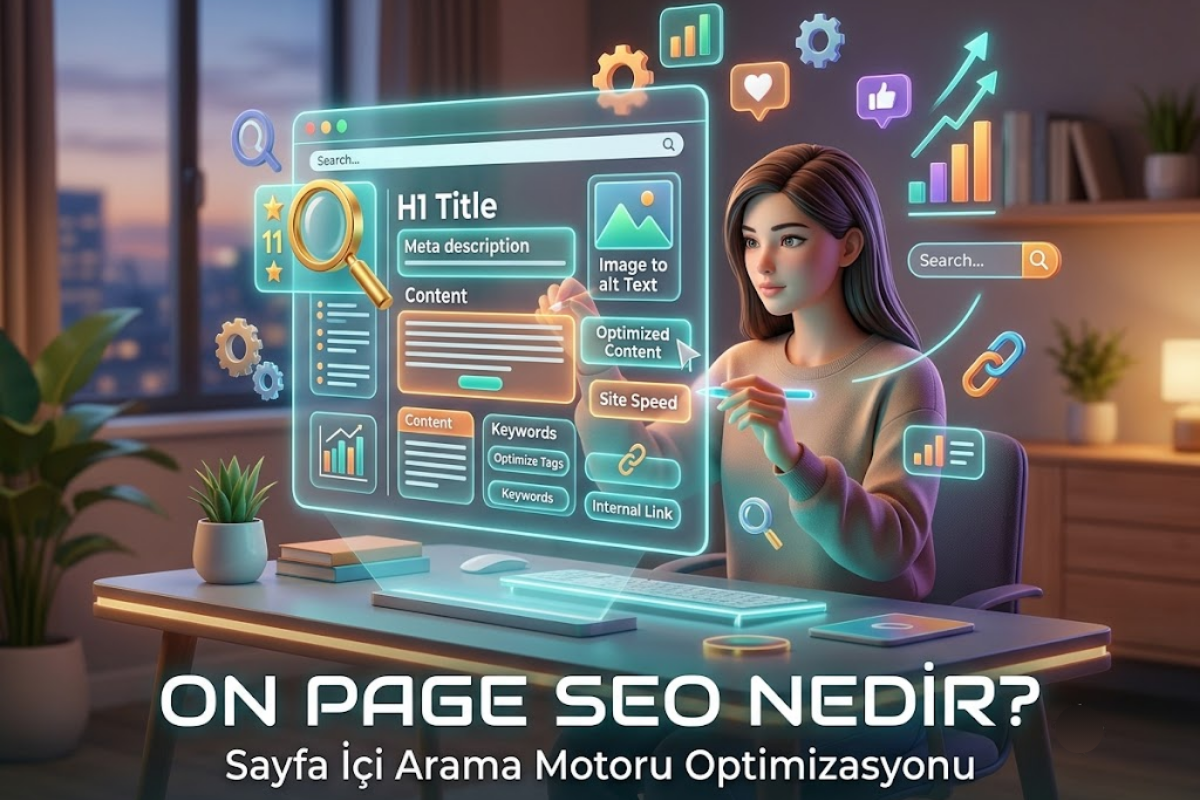
Making a website visible in the digital world is no longer just a preference, but a necessity. So, what is the first and most critical step to being valuable in the eyes of search engines? At this point, the answer to the question "What is On-Page SEO?" forms the cornerstone of a successful digital strategy. While search engines evaluate many signals, from the quality of your site's content to its technical infrastructure, on-page optimization is the most powerful area you can directly control.
On-Page SEO encompasses all optimization efforts made within a webpage to help it rank better in search engines and be correctly understood by both users and Google. These efforts include many elements, from content quality and relevance to search intent, to title tags, heading hierarchy (H1/H2/H3), URL structure, internal linking, and image alt text. In short, all elements that you can directly control "on the page" fall under this scope. How solid do you think these elements, which form the foundation of your site, are?
Why is On-Page SEO So Important?
Search engines crawl billions of web pages on the internet to provide the most relevant results to users' queries. In this process, on-page SEO factors play a decisive role. Google needs on-page signals to understand the content of a page and associate it with a specific search term. If your site is technically flawed or your content is not structured in a way that search engines can understand, it will be difficult to reach your target audience, no matter how high-quality information you provide.
The biggest advantage of on-page SEO work is the full control it gives you. While off-page SEO (external factors such as backlinks) relies on external sources, with on-page optimization, the reins are entirely in your hands. You can change and improve your titles, content structure, and site speed at any time. This control allows you to react quickly to algorithm updates. For example, after Google's core update in 2024, many sites lost traffic, while those with a solid on-page SEO infrastructure were minimally affected by these changes.
On-Page SEO and User Experience Relationship
With Google's updates in recent years, user experience (UX) signals have also become ranking factors. On-page SEO optimization also aims to improve user experience. Search engines analyze how long users stay on a page, whether they bounce immediately, and their interactions within the page to determine the quality of that page. A well-designed on-page SEO strategy increases page speed, reducing waiting times, provides mobile compatibility, making it easy to access from any device, and helps users find what they are looking for with clear site navigation.
Expert Tip: To increase the time users spend on the page (dwell time), enrich your content with visuals, videos, and interactive elements. This is a strong signal to Google that users find your content valuable.
What is the Difference Between On-Page SEO and Off-Page SEO?
One of the most confusing concepts in the SEO world is the difference between on-page and off-page SEO. Clarifying these two concepts is the first step to creating a correct strategy. In short, on-page is the content and markup of the page; off-page is the page's reputation and links outside the site. The table below summarizes the main differences between these two areas:
Feature | On-Page SEO | Off-Page SEO |
|---|---|---|
Scope | Page content, titles, meta tags, internal links, URL structure, site speed, mobile compatibility | Backlinks, social media interactions, brand mentions, trust signals |
Control | Completely under your control | Partially under your control (earned, not directly written) |
Purpose | Ensuring the page is correctly understood by search engines and provides value to the user | Increasing the site's authority and trustworthiness |
Examples | Title tag, H1/H2 headings, quality content, internal linking, alt text | Links from other sites, guest posts, influencer collaborations |
In summary, while off-page SEO builds your site's reputation in the outside world, on-page SEO work prepares the solid ground on which this reputation will be built. The two are complementary parts of a whole; however, without a solid foundation, no external support will be permanent.
Common Mistake: Many website owners spend all their energy gathering backlinks and neglect on-page optimization. However, Google can devalue even high-quality backlinks to a weak and unhelpful site over time.
How to Do On-Page SEO? 2026 Approach
The answer to the question of how to do on-page SEO in 2026 requires a more holistic approach than in previous years. Google's Helpful Content system and E-E-A-T (Experience, Expertise, Authoritativeness, Trustworthiness) principles necessitate not only applying technical rules but also producing truly valuable and user-centric content. The answer to how to do on-page SEO starts with understanding the user's search intent. You need to provide the best possible answer to a query, the answer that the person making the query truly expects. This means much more than just sprinkling keywords on the page.
Thinking of On-Page SEO in three main groups will clarify your work: content elements, HTML/markup elements, and on-page architectural elements. These three groups are not disconnected; in a good page, all three work together. In the 2026 approach, the greatest emphasis is placed on content elements. Most businesses spend a large part of their time on HTML settings (like title character count, keyword position in H1); however, in Google's 2026 evaluation, the content itself is the main determinant. Markup and architecture act as multipliers that ensure good content is correctly understood; if the content is weak, no markup can save it.
1. Content-Oriented On-Page SEO Factors
Content is perhaps the most critical and time-consuming area of on-page SEO. Google rewards pages that provide the best answers to users' questions. So, how is SEO-friendly content created?
Understanding User Intent (Search Intent)
Behind every search query lies an intent. This intent can be grouped into four main categories: informational, navigational, transactional, and commercial investigation. Among on-page SEO techniques, the most important is to create your content in full accordance with this intent. For example, a user asking "What is On-Page SEO?" most likely wants to gain information. Instead of trying to sell a service directly to this person, you should explain the topic from the beginning, clearly and comprehensively. Google analyzes how compatible your page is with the search intent and ranks it accordingly.
Professional Advice: Analyze the content of competitors ranking on the first page of Google for your target keyword. What subheadings did they cover? What questions did they answer? Your content should be more comprehensive and up-to-date than theirs.
Content Length and Depth
For many years, there has been a saying in the SEO world that "longer content ranks better." This is true, but it's not enough on its own. A 3000-word inflated, empty content will always perform worse than a 1000-word concise and valuable content. The important thing is to offer content that covers the topic in all its aspects, with enough depth to answer all questions in the reader's mind. Google's Helpful Content system rewards exactly this: content that truly helps the user. According to 2026 data, the average word count of content on the first page ranges between 1800-2500 words. However, this can increase depending on the depth of the topic. As in this guide, focus on providing all the information your target audience needs completely.
Keyword Usage (Keyword Density)
Naturally placing your focus keyword in the content is one of the must-haves of on-page SEO. However, there is a delicate balance here. Over-repetition of keywords (keyword stuffing) is a practice punished by Google. The goal is to use the keyword without disrupting the natural flow of the text. When answering the question "What is On-Page SEO?" on your site, you should also use natural variations (LSI keywords) in addition to this phrase. Remember, content is written for humans first, then optimized for search engines. If your text looks robotic and keyword-stuffed, you will lose your readers. Google will also notice this.
2. HTML Tags and Metadata
The first places a web page tells search engines "What are you about?" are HTML tags. These tags, which are one of the fundamental building blocks of on-page SEO work, enable both Google bots to understand the page and users to click on your page in search results.
Title Tag Optimization
The title tag is the title that appears in search results and is one of the most important signals for Google to evaluate your page's content. Here's what to consider when performing title tag optimization:
The focus keyword must be at the beginning or near the beginning of the title. For example, the title of this article starts with "What is On-Page SEO?".
The title should be between 50-60 characters. Titles that are too long will be truncated by Google, and the click-through rate (CTR) will decrease.
It should arouse curiosity in the user and create a desire to click. You can use numbers, questions, or strong adjectives.
Each page must have a unique title tag.
Expert Tip: Add a strong promise or benefit statement right next to your focus keyword in your title tag. For example, instead of just "What is On-Page SEO", a structure like "What is On-Page SEO? 2026 Guide: 15 Critical Optimizations" is more effective in terms of both SEO and CTR.
Meta Description Optimization
The Meta Description is the short descriptive text that appears immediately below the title in search results. Although not a direct ranking factor, it directly affects the click-through rate (CTR). Good meta description optimization gives the user a clear idea of what they will find on the page and encourages clicking. Tips:
It should be between 155-160 characters.
The focus keyword should be naturally included.
It should contain a call to action (CTA). For example, "Discover now", "Click for detailed guide", "Read to get started".
It should be unique for each page and accurately reflect the content of the page.
Heading Hierarchy: H1, H2, H3 Usage
The heading hierarchy on a web page is critically important for the structural organization of the content. Google uses this hierarchy to understand the main topic and subtopics of the page.
H1: This is the main heading of the page and should be used only once. It should be the phrase that best summarizes the page's content and include the focus keyword.
H2: These are the main section headings under the main heading. They define the main themes of the page.
H3: These are subheadings under H2 headings. They are used to further detail topics.
A correct heading structure makes it easier for users to navigate the content and helps search bots understand the structure of the content. Let's examine the ideal heading structure with a table:
Heading Level | Purpose of Use | Example | SEO Importance |
|---|---|---|---|
H1 | Main topic of the page | What is On-Page SEO? 2026 Guide | Most important heading. Focus keyword must be included. |
H2 | Main section headings | Why is On-Page SEO Important? | Defines the main sub-branches of the topic. Second most important for SEO. |
H3 | Subtopic headings | What is Search Intent? | Details H2. Enriches the content. |
H4 and Below | Deeper details | - | Not used unless absolutely necessary. H3 is sufficient. |
Common Mistake: Using more than one H1 tag on a page or only using large fonts visually and neglecting HTML hierarchy. The heading hierarchy should be correctly established not only visually but also structurally.
3. URL Structure and Permalink Optimization
A page's URL is an important source of information for both users and search engines. Short, descriptive, and keyword-rich URLs give a clear idea of the page's topic. In the on-page SEO optimization process, URL structure is often overlooked but is an important detail.
What Should an SEO-Friendly URL Look Like?
It should be short and concise: It should not contain unnecessary words, numbers, or parameters.
It should contain keywords: A keyword reflecting the main topic of the page should be in the URL.
Turkish characters should not be used: Even if you are in Turkey, characters such as ğ, ü, ş, ı, ö, ç should not be used in URLs. For example, "on-page-seo-nedir" (what is on-page SEO).
Hyphens (-) should be used between words: Hyphens (-) should be used to separate words, not underscores (_). Google recognizes hyphens as word separators.
Case sensitivity: All URLs should be written in lowercase letters.
For example:
Bad URL:
https://digitalup.tr/post/12345?category=15Good URL:
https://digitalup.tr/on-page-seo
4. Image Optimization
Images are one of the most important elements that enrich content. However, when not optimized, they negatively affect page speed and degrade user experience. Image optimization is an indispensable part of on-page SEO.
Image Sizing and Compression
High-resolution, heavy images significantly increase page load time. This negatively affects user experience and degrades LCP (Largest Contentful Paint), a Google Core Web Vitals metric. Always compress your images (prefer WebP format) and resize them according to their usage before uploading them to the site.
Use of Alt Text
Alt text is the text that allows search engines to "read" images. It describes what the image is about and provides accessibility, especially for visually impaired users. When writing alt text:
Describe the image briefly and clearly.
If you have the opportunity, use the focus keyword or LSI keywords naturally.
Avoid keyword stuffing.
Do not start with phrases like "Image", "photo"; go straight to the description.
Expert Tip: Make the image file name SEO-friendly as well. Instead of "DSC_1234.jpg", use descriptive names like "on-page-seo-work-diagram.png".
5. Internal Linking Strategy
Internal linking is the practice of connecting pages on your website to each other. This strategy not only helps visitors stay on your site longer but also signals to Google which pages on your site are more important. It also increases the authority and ranking potential of the linked page. A proper internal linking strategy is a must for on-page SEO.
Link to meaningful and relevant pages. Avoid random links.
The anchor text for the link should be descriptive of the page's content. Instead of general phrases like "Click here," use the keyword of the page you are linking to.
Link from your newly published content to older, authoritative content.
Make sure every page is linked to at least one other important page on your site.
Site maps and navigation menus are also part of the internal linking strategy.
6. Page Speed and Core Web Vitals
How quickly a page loads is a critical factor for both user experience and search engine rankings. Google uses three main metrics called Core Web Vitals to measure page experience: LCP (Largest Contentful Paint), FID (First Input Delay), and CLS (Cumulative Layout Shift). As of 2026, these metrics continue to function as direct ranking signals.
What you can do for page speed optimization:
Compress images in WebP format and reduce file sizes
Clean up unnecessary JavaScript and CSS files
Use caching
Choose a fast and reliable hosting service
Consider using AMP (Accelerated Mobile Pages)
Expert Tip: Regularly test your site's speed with tools like Google PageSpeed Insights or GTmetrix. Aim for a load time under 2 seconds on mobile devices. According to Ahrefs data, page speed improvements can directly lead to ranking increases.
7. Mobile Compatibility (Mobile-First Indexing)
Google continues its mobile-first indexing strategy in 2026. This means Google primarily considers your site's mobile version when determining its ranking. If your mobile version is weaker than your desktop version, you will inevitably experience a drop in rankings.
Things to check for mobile compatibility:
Use of responsive design
Readable font sizes on mobile devices
Sufficient size of tap targets (buttons, links)
Pop-ups or overlay windows on mobile devices should not interfere with user experience
Mobile loading speed should be close to desktop speeds
Common Mistake: Some sites look perfect on the desktop version but are cluttered and unusable on mobile. This is a major handicap because Google evaluates based on the mobile version.
8. Use of Schema Markup
Schema markup, which is becoming increasingly important among on-page SEO techniques, provides additional context to search engines about the content on your page. Correct use of schema can help you get rich snippets, thus increasing your click-through rate. In 2026, schema usage has become almost mandatory.
Common schema types:
Article Schema: For blog posts and news content
FAQ Schema: For the frequently asked questions section
Product Schema: For e-commerce product pages
Local Business Schema: For local businesses
Review Schema: For product or service reviews
Expert Tip: FAQ Page schema allows you to get a question-and-answer display directly in search results. This both increases visibility and boosts the click-through rate.
9. User Experience (UX) and Engagement Signals
Google also analyzes user behavior when measuring the quality of a page. Metrics such as bounce rate, dwell time, and click-through rate (CTR) give Google an idea of how valuable your page is. Focusing on improving these signals during on-page SEO work is critical for long-term success.
To improve user experience:
Provide readable and organized content (short paragraphs, lists, images)
Create an intuitive and easy-to-navigate menu structure
Add an on-page search feature
Regularly update and keep your content fresh
Keep readers on your site with previous and next content links
10. On-Page SEO Checklist
Here are the steps you need to follow for a successful on-page SEO strategy in 2026:
□ Target keyword identified and search intent analyzed
□ Page title (Title) is between 50-60 characters and includes the focus keyword
□ Meta description is between 155-160 characters and is click-oriented
□ H1 tag used only once and contains the keyword
□ H2-H3 headings clearly reveal the structure of the content
□ URL is short, descriptive, and contains keywords
□ Images are compressed, in WebP format, and contain alt text
□ Internal linking strategy applied
□ Schema markup added
□ Page speed and Core Web Vitals metrics optimized
□ Displays seamlessly on mobile devices
□ Content provides value to the user, is unique, and comprehensive
Future Trends in On-Page SEO
In 2026 and beyond, the evolution of on-page SEO will continue. AI-powered search engines (such as ChatGPT Search, Gemini, Perplexity) will focus not only on keywords but also on the context, reliability, and real benefit the content provides to the user when evaluating content. Therefore, content that adheres to E-E-A-T (Experience, Expertise, Authoritativeness, Trustworthiness) principles, has a clear author identity, and cites sources will stand out.
Professional Advice: When creating your content, ask yourself, "Where would a human want to learn this information from?" Google's helpful content system rewards the best answers to exactly this question.
Next Step: Start Applying On-Page SEO to Your Site
On-Page SEO is not a one-time task that you do and forget; it's a dynamic process that requires continuous monitoring, testing, and improvement. If you want to be successful in the digital marketing world, you must solidify your site's foundation by following the steps in this guide.
Remember, the main goal in SEO is to satisfy real users, not search engines. Search engines are merely a reflection of this satisfaction. As Google states, create content for people first, and the rest will follow. See: https://digitalup.tr/blog/seo-nedir
Frequently asked questions
What is the main difference between On-Page SEO and Off-Page SEO?+
On-Page SEO refers to optimizations performed within the web page itself (such as content, headings, meta tags, URL structure), while Off-Page SEO covers factors outside the page (such as backlinks, social media interactions, brand reputation). On-Page SEO is entirely within your control, whereas Off-Page SEO is a more indirect process.
How long does On-Page SEO work take?+
The duration depends on the size and current status of your site. Basic optimizations for a single page (title, meta, images, internal links) can be done in a few hours. However, a comprehensive on-page SEO strategy, especially considering content creation and technical improvements, can take weeks or months.
What should be the keyword density in On-Page SEO?+
As of 2026, the ideal keyword density is between 1% and 1.5%. However, using the keyword naturally is more important than this percentage. Avoid keyword stuffing; Google penalizes such over-optimization.
How to write SEO-friendly content?+
SEO-friendly content is primarily comprehensive and original content that best answers the user's query. The title, meta description, H1/H2 tags should be used correctly, visuals should be optimized, and supported with internal links. Google's helpful content system rewards content that offers real value to the user.
What are the most common mistakes in On-Page SEO?+
The most common mistakes include keyword stuffing, insufficient content depth, skipping or copying meta descriptions, meaningless URLs, neglecting image optimization, and lacking an internal linking strategy.
Sources

Recep Bayoğlu
SEO Team Leader
If you want to talk more about this topic or need a tailored solution for your brand, you can reach me directly.
Our Services
Related Services
Google Ads Management
Top pickUse your ad budget most efficiently with professional Google Ads management.
Meta (Facebook & Instagram)
Reach your target audience with Facebook and Instagram ads.
SEO Consulting
Rank higher in search engines and grow organic traffic.
GEO Consulting
Get cited as a source inside ChatGPT, Gemini and Perplexity answers.
Social Media Management
Strengthen your online presence with professional social media management.
E-Commerce Solutions
T-Soft, İkas, Ticimax and İdeasoft infrastructures.
TikTok Ads
Reach young audiences with TikTok ads.
Video Production
Professional 4K video production services.
Web Design
Modern user-friendly web design.
Yandex Ads Management
Reach Russian and CIS markets with Yandex ads.
Telegram Ads Management
Reach audiences directly with Telegram sponsored messages.
ChatGPT Ads Consulting
Position your brand in the in-chat advertising ecosystem.
Gemini Ads Consulting
Gain an early advantage in Google AI Mode ads.
T-Soft E-Commerce Site
T-Soft infrastructure for enterprise scale.
İdeasoft E-Commerce Site
Flexible and powerful e-commerce infrastructure.
İkas E-Commerce Site
Fast setup, modern e-commerce infrastructure.
Ticimax E-Commerce Site
Scalable e-commerce solution.
More from this category
digitalup What Are SEO Services? What Does Search Engine Optimization (SEO) Service Cover?
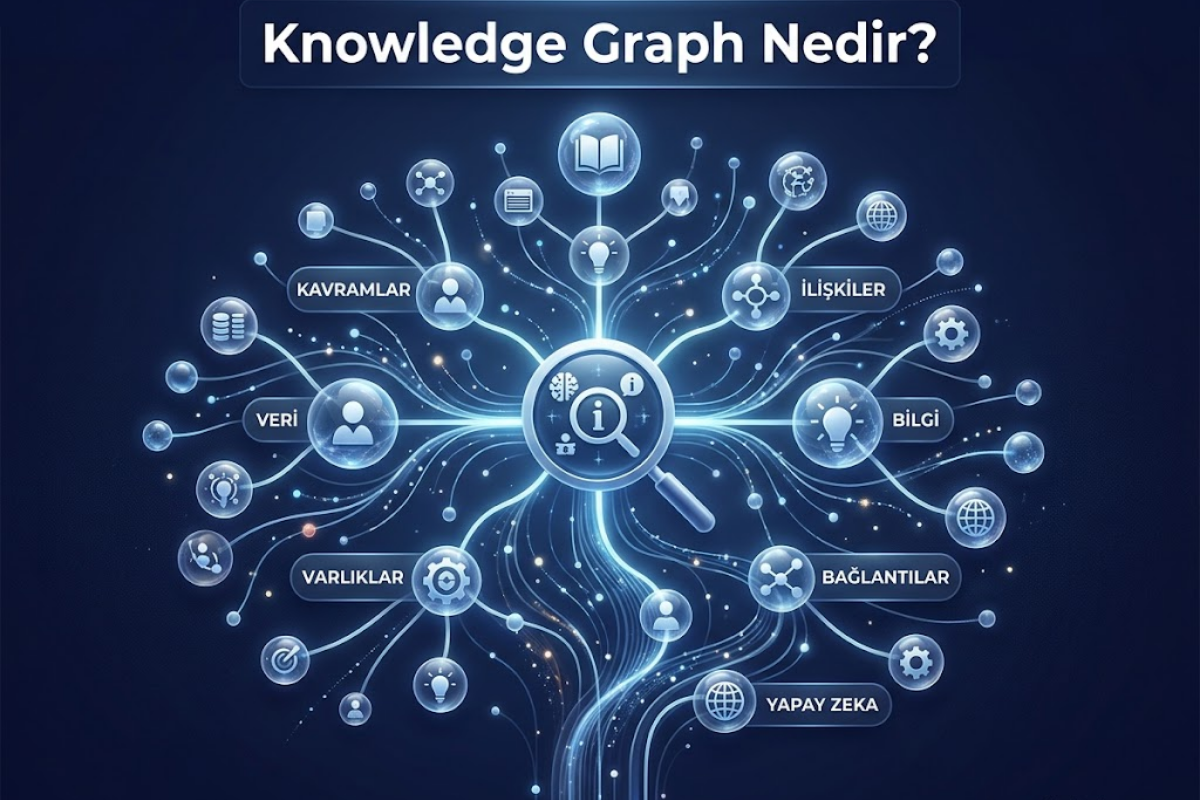
digitalup What is a Knowledge Graph?
digitalup Can SEO Be Done With Artificial Intelligence? (Step-by-Step AI SEO Guide)